
Safes Adelaide.
Home and business safes supplied and installed, combinations changed, and safes opened when the code is gone or the lock has failed. A safe that is not properly fixed down is a portable box with your valuables in it.
Buy for the contents, not the cupboard it fits.
The usual approach is to find a safe that fits a space at a price that feels reasonable. That gets the order backwards, and it is how people end up with a safe that satisfies neither their insurer nor an intruder with a crowbar.
Start with two questions
What is going in it, and what is that worth? Cash, jewellery, documents, firearms, medication and data all pull in different directions. Insurers frequently specify a cash rating, and if a policy names one, the safe has to meet it or the cover may not respond.
What are you protecting against? Opportunist theft, determined attack, or fire? These are genuinely different products. A fire-resistant document safe protects paper from heat and is often relatively light, which makes it easy to remove. A burglary-rated safe resists attack but may offer little fire protection. Where both matter, you want a safe specified for both, not one and a hope.
Then size and location
Buy larger than your current contents. Safes fill up, and outgrowing one means buying twice and installing twice.
Location matters as much as the safe. Somewhere not visible to a casual visitor, on a surface that can take the weight and the anchors, and where you can actually get to it comfortably, because a safe that is awkward to open is one that ends up left unlocked.
An unanchored safe is a delivery box.
The most common way safes are defeated is not attack on the door. It is the whole safe leaving the building.
Anchored properly
Fixed through the manufacturer's points into substrate that will actually hold: concrete where possible, structural timber otherwise.
Placed sensibly
Out of sight of visitors and windows, and not in the first place anyone would look.
Room to work
Enough clearance that the door opens fully and the contents are genuinely reachable.
Handover
Combination set to your choice, operation explained, and the override arrangement made clear.
Safes ship with a default manufacturer code, and those defaults are widely published for most models. A safe still running its factory combination is not locked in any meaningful sense. If you have inherited a safe with a property or a business, treat the code as compromised until it has been changed.
A safe is only as good as its fixings.
Most safes are defeated by leaving the building rather than being opened in it. Installation is as much about the anchors and the substrate beneath them as the safe itself.
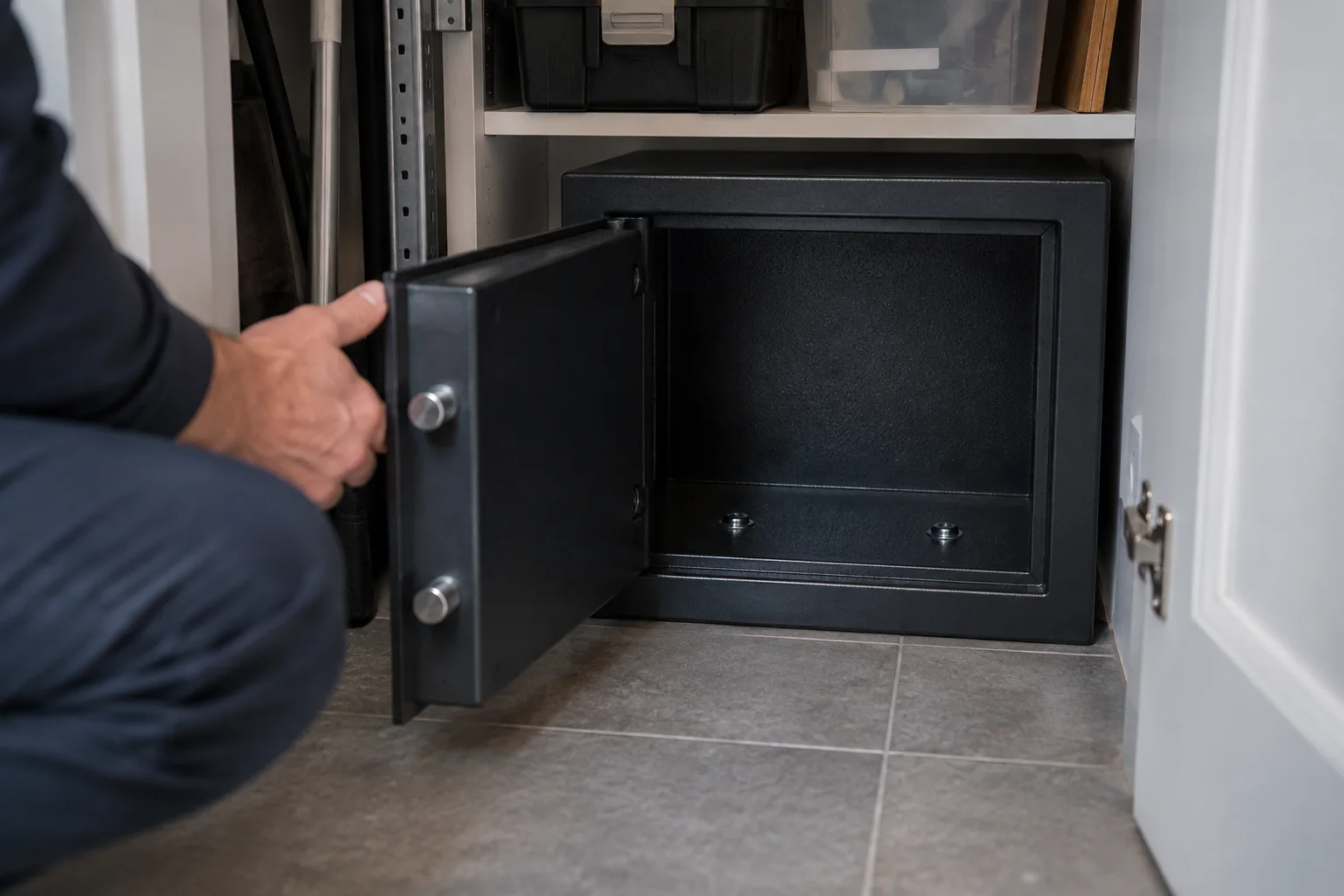
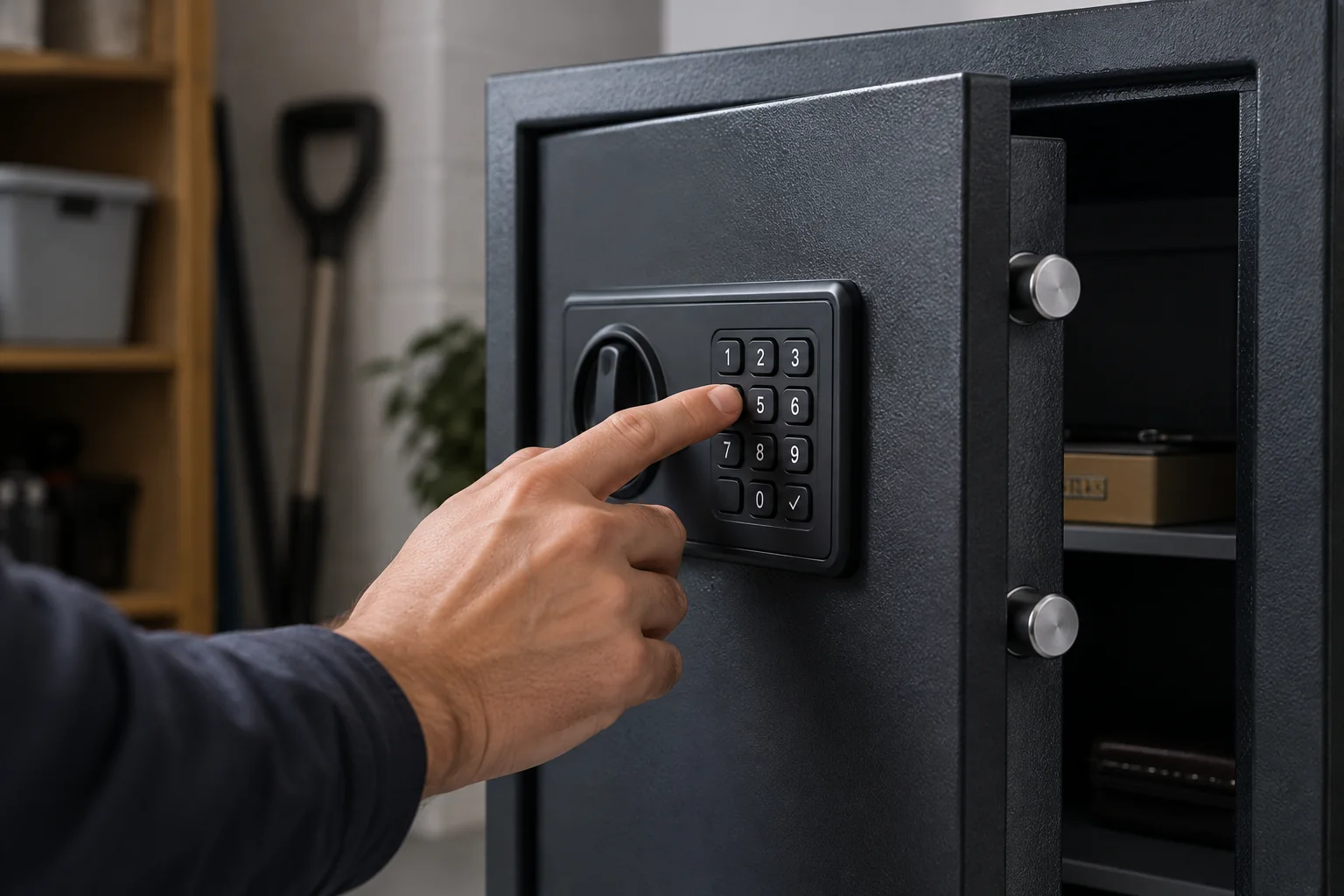
Buying, opening and servicing.
For an opening, have proof of ownership ready: it will be asked for before any work starts.
Ask about a safeI have lost the combination. Can you open it?
In many cases. What is involved depends on the make, model and lock type, and whether the safe can be opened without damage or has to be drilled. Proof of ownership and identification are required first, without exception. Give us the make and model and we can indicate what is likely before attending.
Will opening it destroy the safe?
Not necessarily. Some safes can be opened non-destructively. Where drilling is required, it is done in a controlled position and the safe can often be repaired and returned to service afterwards. Whether repair is worthwhile depends on the safe's value and rating, and that is discussed before anything is drilled.
My electronic keypad has stopped responding.
Try fresh batteries first: flat batteries are far and away the most common cause, and many safes give little warning. If new batteries do not help, the lock or the solenoid may have failed, which is a service call. Do not keep entering codes repeatedly, as many models lock out after several failed attempts.
Can I install a safe myself?
You can, and it frequently goes wrong in ways that are not obvious. The common faults are anchors into unsuitable substrate, fixings that do not use the manufacturer's points, and safes placed where the floor cannot carry the load. Any of those undermines the whole purchase. It is also worth checking whether your insurer requires professional installation.
Can you change the combination on my existing safe?
Yes, on most models, provided the safe is open and functioning. Well worth doing after buying a property or a business, or whenever someone who knew the code no longer needs it. On many electronic locks you can then manage codes yourself, and we will show you how.
What size do I need?
Larger than you currently think. Almost everyone underestimates, and safes accumulate contents quickly. Document folders and jewellery boxes take more room than expected, and internal shelving reduces usable space further. Tell us what is going in and roughly what it is worth, and the sizing follows.
Layers around the safe.
A safe protects contents. Getting an intruder to the safe in the first place is the wider job.
Residential locksmith
Home security, so the safe is the last barrier rather than the first.
02Commercial locksmith
Business premises, cash handling areas and restricted rooms.
03Alarm systems
Detection, so an attempt is known about while it is happening.
04CCTV installation
Coverage of the room the safe is in, and the approach to it.
Tell us what you need secured.
Call for urgent locksmith assistance or send the details of a residential, commercial, automotive or electronic security enquiry.