
Restricted Key Systems Adelaide.
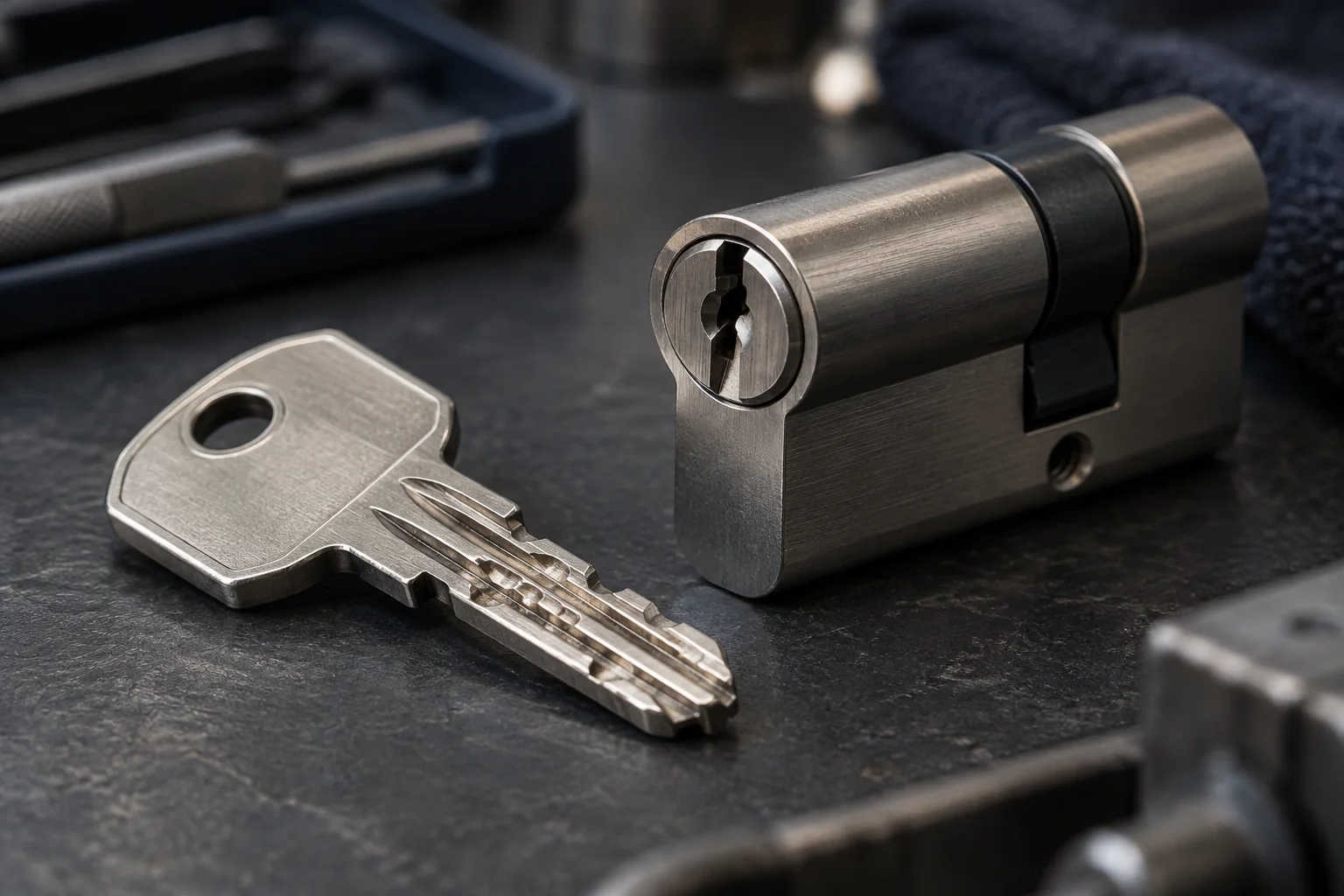
A restricted system means your keys cannot be copied at a kiosk. Blanks are not sold openly, cutting is tied to an authorised list, and every key issued is recorded, so for the first time you actually know how many exist.
Two things stop a key being copied.
The blank is not available. Restricted systems use key profiles that are not sold through general channels. A cutting kiosk cannot copy your key because it does not have, and cannot buy, a blank that fits the keyway.
Cutting is tied to authorisation. The system is held on a register naming who may request keys. A request from anyone not on that list is declined. This is the part that matters operationally, because it survives staff changes.
Patented versus restricted
These get used interchangeably and are not the same. Restricted describes the commercial control: a distribution agreement limiting who can supply blanks. Patented means the key or cylinder design is protected by an active patent, which makes unauthorised blanks legally as well as practically difficult to produce.
A patented system generally offers stronger protection for as long as the patent runs. When choosing, it is fair to ask how long that has left, because protection weakens once it lapses.
What it does not do
Restriction controls duplication. It is not, by itself, a statement about how much force the lock resists, although restricted cylinders are usually higher grade and often include pick and drill resistance. If forced entry is the concern, that is a separate hardware question worth asking directly.
When restriction pays for itself.
Restricted systems cost more per cylinder and per key. The return is not having to rekey a site every time somebody leaves.
A restricted system creates a dependency on whoever holds the distribution rights. Before committing, it is entirely reasonable to ask what happens if you want to change supplier, how quickly replacement keys can be produced, and what the arrangement is if the business relationship ends. Any supplier confident in the answer will give it to you straight.
Keys you can actually account for.
Restricted profiles are cut only against an authorised list, and every key issued is recorded. That register is what turns a missing key from a guess into a known quantity.

Before you commit.
Tell us the site, the number of doors and roughly how many keyholders, and the numbers become concrete.
Get adviceCan someone else copy my restricted key?
Not through ordinary channels. The blank is not available to general cutting services, and an authorised supplier will check any request against the system register before cutting. No system is absolutely uncopyable by a determined specialist, but restriction removes the casual route entirely, which is where nearly all uncontrolled copies come from.
What if I need a key urgently?
Turnaround depends on the system and whether blanks are held locally. This is worth asking about before choosing a system, especially for a site that cannot tolerate a wait. Some organisations keep a small buffer of pre-cut spares in controlled storage for exactly this reason.
Do we have to replace all our locks?
Usually only the cylinders, not the complete locksets. Many commercial lock bodies and door furniture will accept a restricted cylinder, so the visible hardware and the door stay as they are. Which doors can be converted is confirmed during the site assessment.
Can it be phased across a site?
Yes, and it is common. Perimeter and high-risk doors typically convert first, with internal doors following as budget allows. The chart is designed for the finished system from the outset so the later stages drop in without rework.
Who holds the authorisation list?
You nominate who may authorise key requests, and that is held against your system. It is worth naming more than one person so key requests are not blocked by a single individual being unavailable, and worth reviewing it whenever those roles change.
Is restricted the same as high security?
Related but not identical. Restriction is about controlling duplication. High security refers to physical resistance: picking, drilling, bumping and forced attack. Most restricted cylinders are also built to a higher physical standard, but if attack resistance is your main concern, say so, because that shapes the hardware choice.
Usually part of a bigger picture.
Restriction addresses copying. These address structure, timing and visibility.
Master key systems
Define which doors each key opens; restriction then protects that structure.
02Access control
Where permissions change too often for any mechanical key to keep up.
03Strata & body corporate
Common property, where uncontrolled copying is the classic failure mode.
04Government
Environments where key control is a documented requirement, not a preference.
Tell us what you need secured.
Call for urgent locksmith assistance or send the details of a residential, commercial, automotive or electronic security enquiry.