
Alarm System Installation Adelaide.
An alarm is only worth having if it gets armed. Systems designed around how a property is actually used get armed every day; systems that make life awkward get switched off within a month.
Why alarms stop being used.
Almost every abandoned alarm system failed for a behavioural reason, not a technical one.
False alarms
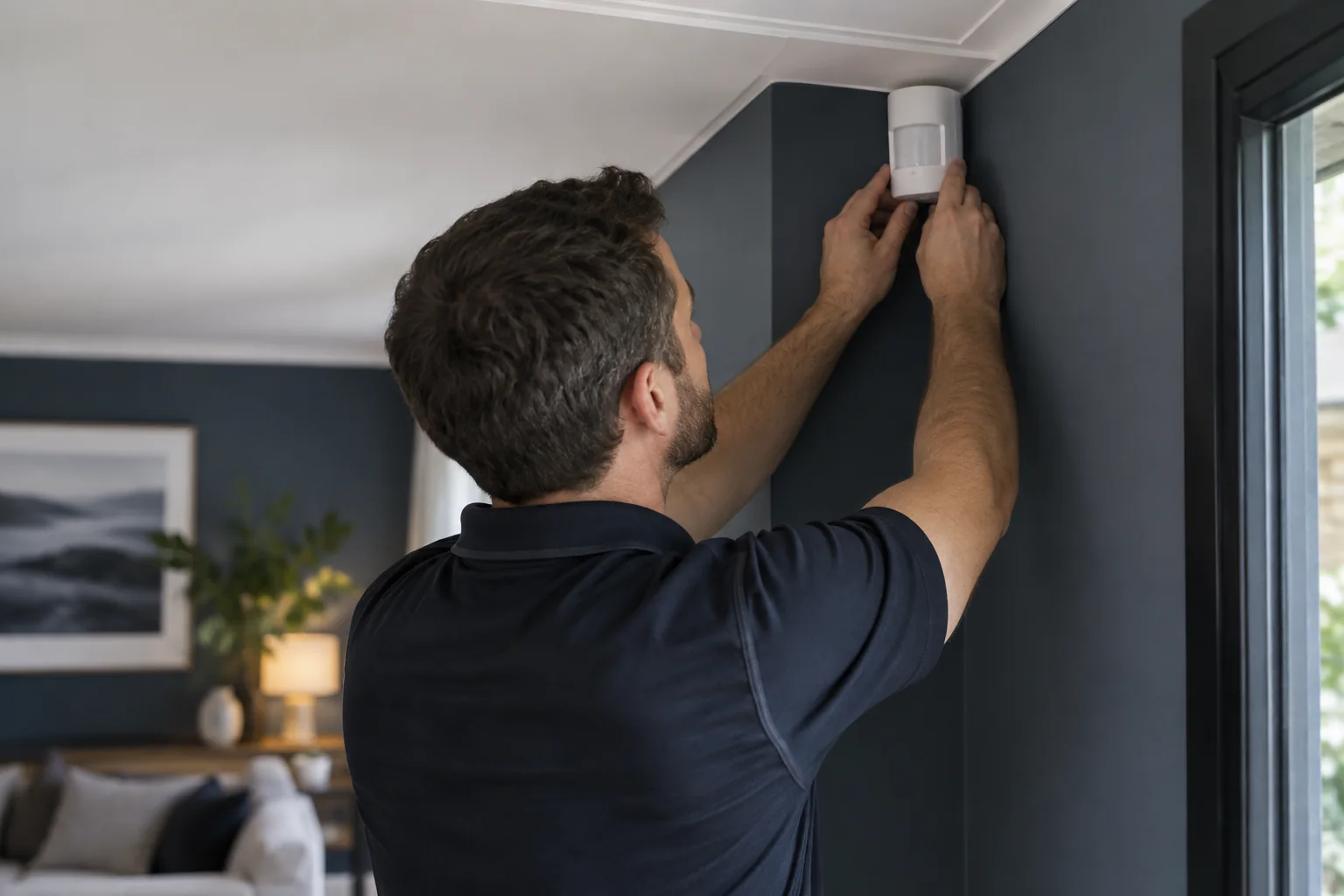
Detectors placed without thought for pets, ceiling fans, heaters or sunlight through a window trigger repeatedly. After the third false call-out at 3am, people stop arming it. Pet-tolerant detectors and sensible placement solve most of this at design time.
No partial arming
If the only options are fully on and fully off, the system is useless while anyone is home, which is most of the time. Zoning lets you arm the perimeter and leave internal detectors off, so it protects you overnight rather than sitting idle.
Awkward entry and exit
Too short an entry delay means fumbling at the keypad with shopping. Too long and an intruder has time to work. Getting this right for the actual path from the actual door is a small detail that decides whether the system is tolerable.
Nobody knows the code
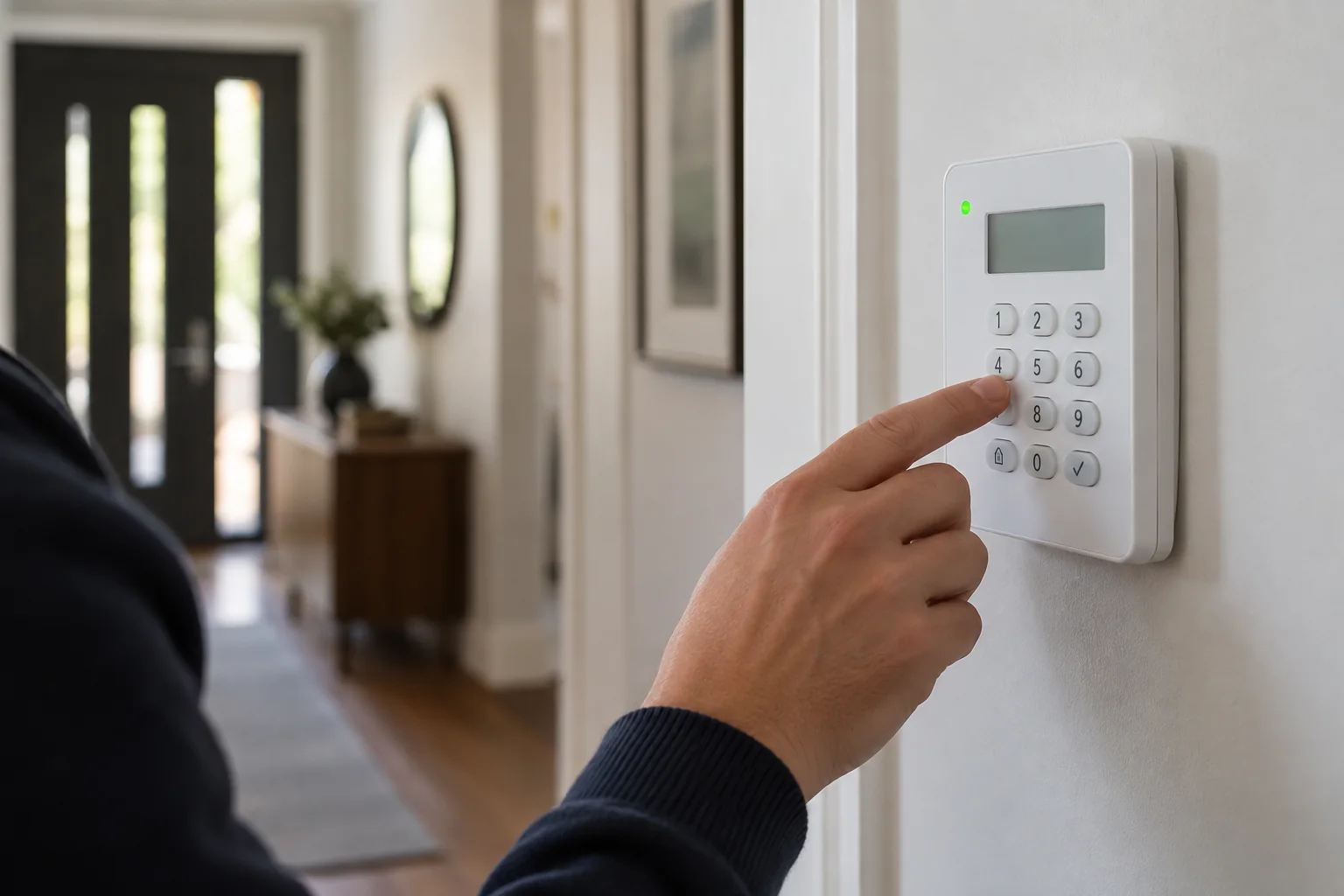
One person set it up and everyone else avoids it. Every regular occupant needs their own code and to know how to use it, which is part of handover rather than something to work out later.
Zoned
Perimeter and interior separated, so "home" and "away" are genuinely different modes.
Pet aware
Detector type and mounting chosen so the dog does not set it off nightly.
Backed up
Battery backup so a power cut, deliberate or otherwise, does not disable it.
Handed over properly
Everyone who lives or works there is shown how to arm, disarm and respond.
What happens when it goes off.
This is the decision that most affects both usefulness and running cost, and it is worth making deliberately.
If you want a guard attending, that is a patrol response contract, usually with a third party, and its terms and costs are separate from monitoring. Where monitoring or patrol response is part of what you need, we will be clear about who provides it and what they commit to, rather than leaving you to discover the boundary during an incident.
An alarm only works if it gets armed.
Detector placement, zoning and entry delays are set around how the property is genuinely lived in, so arming it every night does not become the thing everyone stops bothering with.
Common questions.
Tell us the property, who is usually home and whether there are pets: those three answers shape most of the design.
Discuss a systemWill my pets set it off?
Not if the system is designed for them. Pet-tolerant detectors ignore movement below a size threshold, and mounting height and angle matter as much as the detector. Tell us what animals you have and roughly how big: a cat that climbs presents a different problem from a dog that stays on the floor.
Wired or wireless?
Wired is robust and needs no detector batteries, but means running cable: straightforward during a build or renovation, more disruptive in a finished home. Wireless installs cleanly into an existing property, with battery replacement as the trade-off. Many installations are a mix.
Can I arm it while I am home?
Yes, and it is one of the most valuable features. A home or perimeter mode arms doors and windows while leaving internal detectors inactive, so you are protected overnight without triggering it on the way to the kitchen. It should be set up at installation, not left as something to configure later.
Do I have to pay a monthly fee?
Only if you choose professional monitoring. A local or self-monitored system has no ongoing service fee. Whether monitoring is worth it depends on whether anyone would reliably see and act on a phone alert, for a business or an unoccupied property it often is.
Can you work on my existing alarm?
Often. Many systems just need reprogramming, a battery, a detector relocated or a code reset to be useful again. Where a panel is genuinely obsolete and parts are unavailable, replacement is the honest answer, but it is worth looking first, because a lot of "broken" alarms are simply misconfigured.
Does an alarm reduce my insurance?
Sometimes, and some policies require one for certain contents. Insurers differ on what qualifies, particularly around monitoring. Check your policy wording before installing if a premium reduction is part of the reason, and tell us what it specifies so the system meets it.
The rest of the picture.
An alarm detects. These prevent, record and control.
CCTV installation
Verify an alert before anyone is called out.
02Access control
Manage legitimate entry so the alarm only ever sees the illegitimate kind.
03Door hardware
Physical resistance, which is what actually keeps people out.
04Commercial locksmith
Whole-site security where the alarm is one layer of several.
Tell us what you need secured.
Call for urgent locksmith assistance or send the details of a residential, commercial, automotive or electronic security enquiry.