
Door Hardware Adelaide.
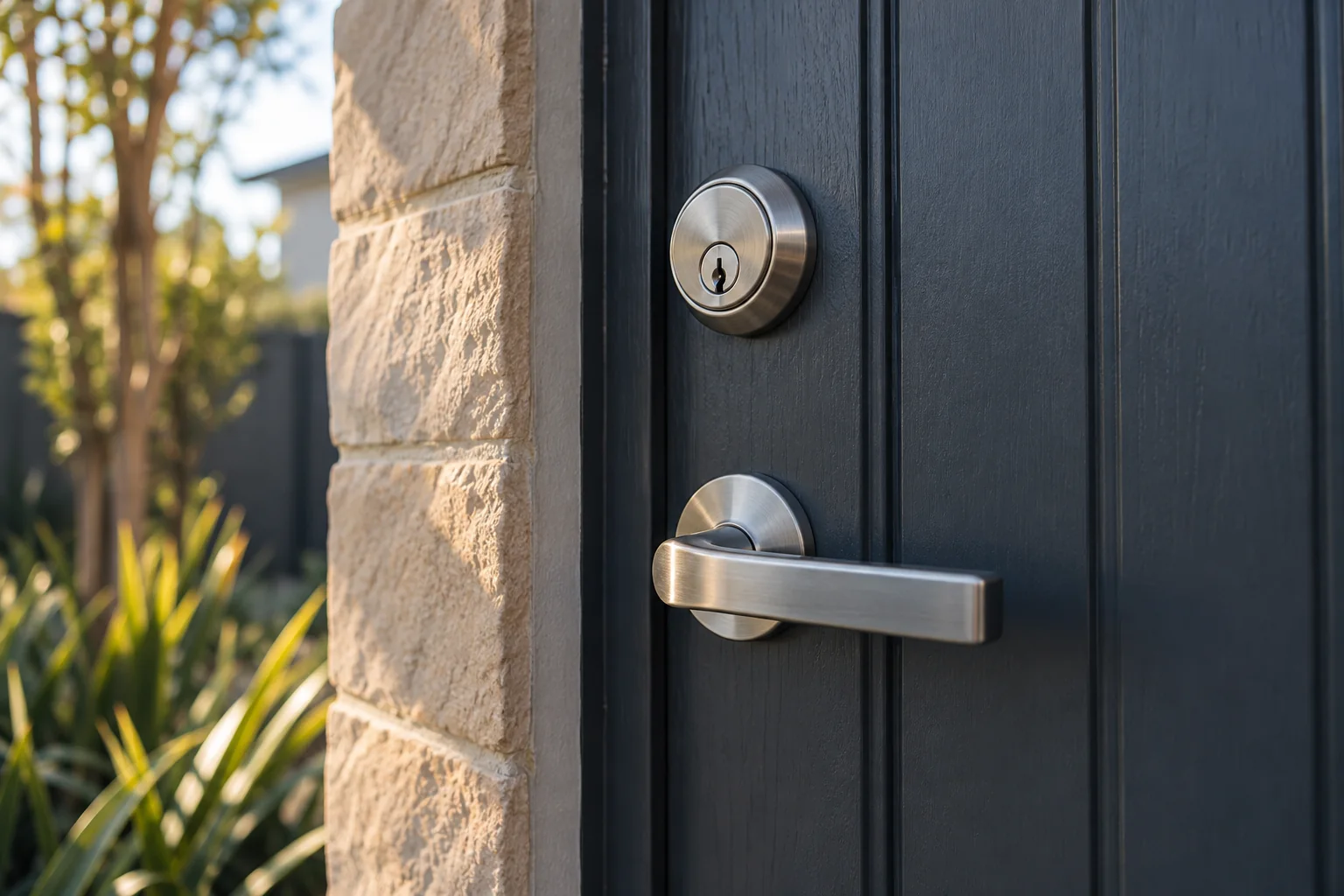
Deadlocks, latches, handles, closers, exit devices, strikes and window locks. The lock gets the attention, but a lock is only ever as good as the door, frame and hardware holding it.
Most doors fail at the frame, not the lock.
When a door is forced, the lock body usually survives. What gives way is the strike plate, the screws holding it, or the jamb timber around it. A substantial deadbolt held by two 15mm screws into soft pine is a strong bolt attached to nothing much.
What actually resists force
- Bolt throw. How far the bolt projects into the frame. A short throw can be levered past the strike without much effort.
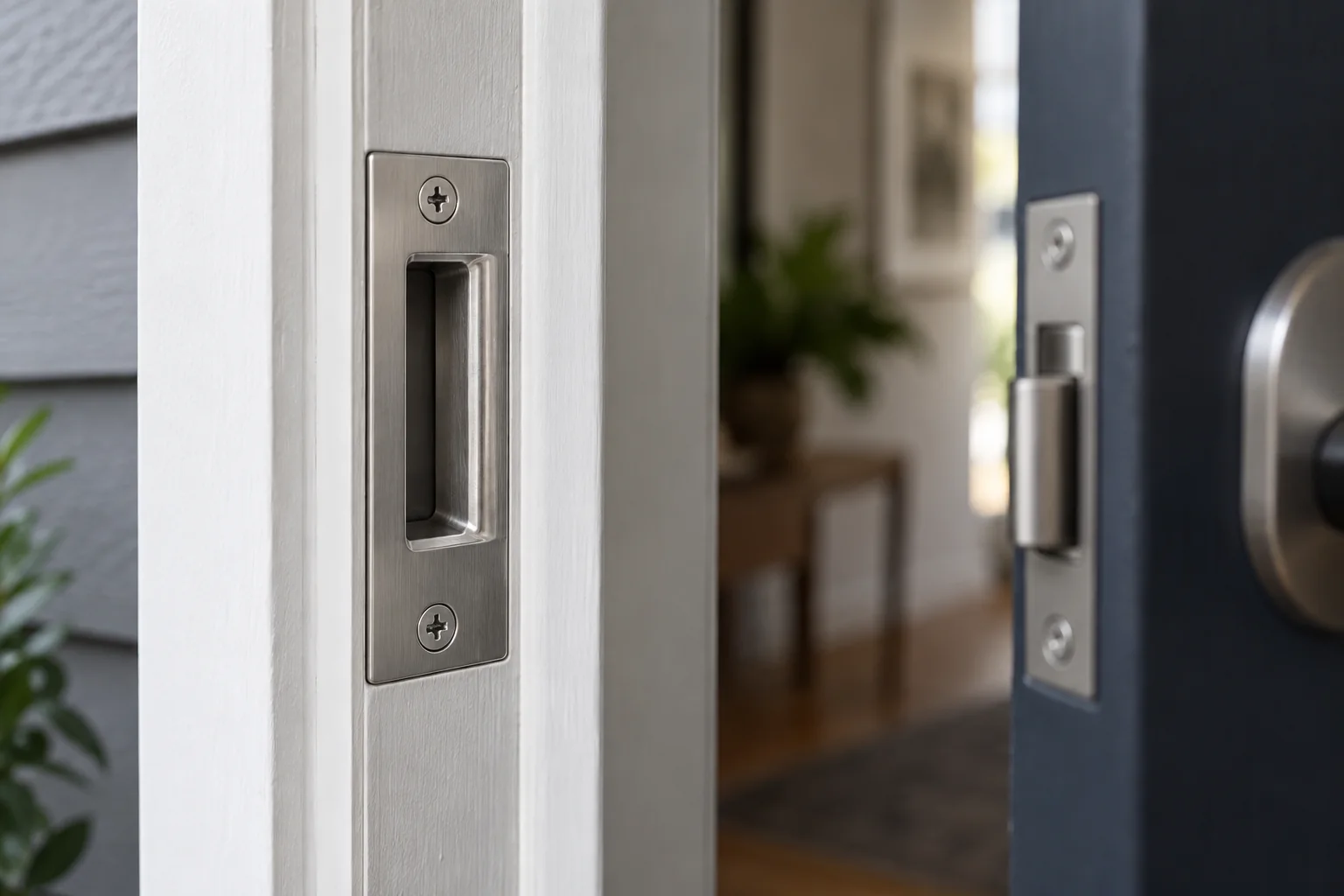
- Strike and fixings. A reinforced strike with long screws reaching structural timber rather than just the architrave.
- Frame condition. Split, rotted or previously repaired jambs undo everything else.
- Hinges. The other side of the door matters. Long screws and, where appropriate, hinge bolts stop a door being levered from the hinge side.
- The door itself. A hollow-core door is not an external door regardless of the lock in it.
Fit is not a detail
Correct mortice depth, packing and alignment are what let hardware perform to its rating. A well-made lock installed poorly under-performs a modest lock installed properly, and the difference is invisible until someone tests it.
Deadlocks
Single and double cylinder, chosen with egress in mind.
Reinforcement
Strikes, plates and long fixings so the frame holds what the lock catches.
Closers
Adjusted so doors close and latch reliably without slamming.
Exit hardware
Panic bars and exit devices where free egress is required.
Match the hardware to the duty.
The commonest and most expensive mistake is domestic hardware on a door that gets commercial traffic.
A deadlock needing a key on the inside stops someone reaching through broken glass to open the door. It also means nobody leaves without a key, which in a fire, at night, in smoke, is a genuine risk. Where one is used, the key must be kept close to the door and every occupant must know exactly where. We will always raise this before fitting one rather than after.
Hardware only performs if it is installed properly.
Correct mortice depth, packing and strike alignment are what let a lock reach the resistance it was built for. A good lock fitted badly is a modest lock.
Choosing and fitting.
A photo of the door edge and the existing lock usually tells us what will fit straight in.
Ask about a doorCan you match new hardware to my existing finish?
Usually. Common finishes are widely available across ranges, so a replacement can sit alongside existing hardware without looking out of place. Older or discontinued finishes are harder, sometimes the tidier result is changing the hardware on one elevation so it is consistent.
Will a new lock fit my existing holes?
Often, if the backset and preparation match. Where it does not, options are a different model, a cover plate, or cutting the door to suit, which is fine on most doors and undesirable on some. Knowing the existing hardware before ordering avoids the awkward version of this conversation.
My door closer slams. Can it be adjusted?
Usually yes. Closers have separate adjustments for closing speed and the final latching action, and most slamming is simply the latch speed set too high. Where a closer is leaking oil or has lost damping internally, it needs replacing: that one is not adjustable.
Do you fit window locks?
Yes, for timber and aluminium windows, sliding and awning types. Worth doing: windows are a common entry point and are frequently overlooked while attention goes to the doors. Restrictors that allow ventilation without full opening are also available.
What is the difference between a deadlock and a deadlatch?
A deadlatch latches automatically when the door closes and resists being slipped with a card. A deadlock has a bolt thrown deliberately by key or turn, giving greater resistance but only when someone actually locks it. Many entry doors sensibly carry both.
Can hardware be keyed to match my other locks?
Generally yes, where keyways are compatible. Mention it when ordering so the right cylinders are supplied: matching at the point of supply is much simpler than rekeying afterwards.
Hardware rarely travels alone.
New hardware is usually part of a repair, a rekey or an upgrade.
Lock repairs & replacement
Where the existing hardware can be brought back rather than replaced.
02Lock rekeying
Bring new and existing hardware onto a single key.
03Access control
Electric strikes and electrified hardware for controlled doors.
04Builders & developers
Hardware schedules and supply for new builds and renovations.
Tell us what you need secured.
Call for urgent locksmith assistance or send the details of a residential, commercial, automotive or electronic security enquiry.