Layer 01
Hardware that holds
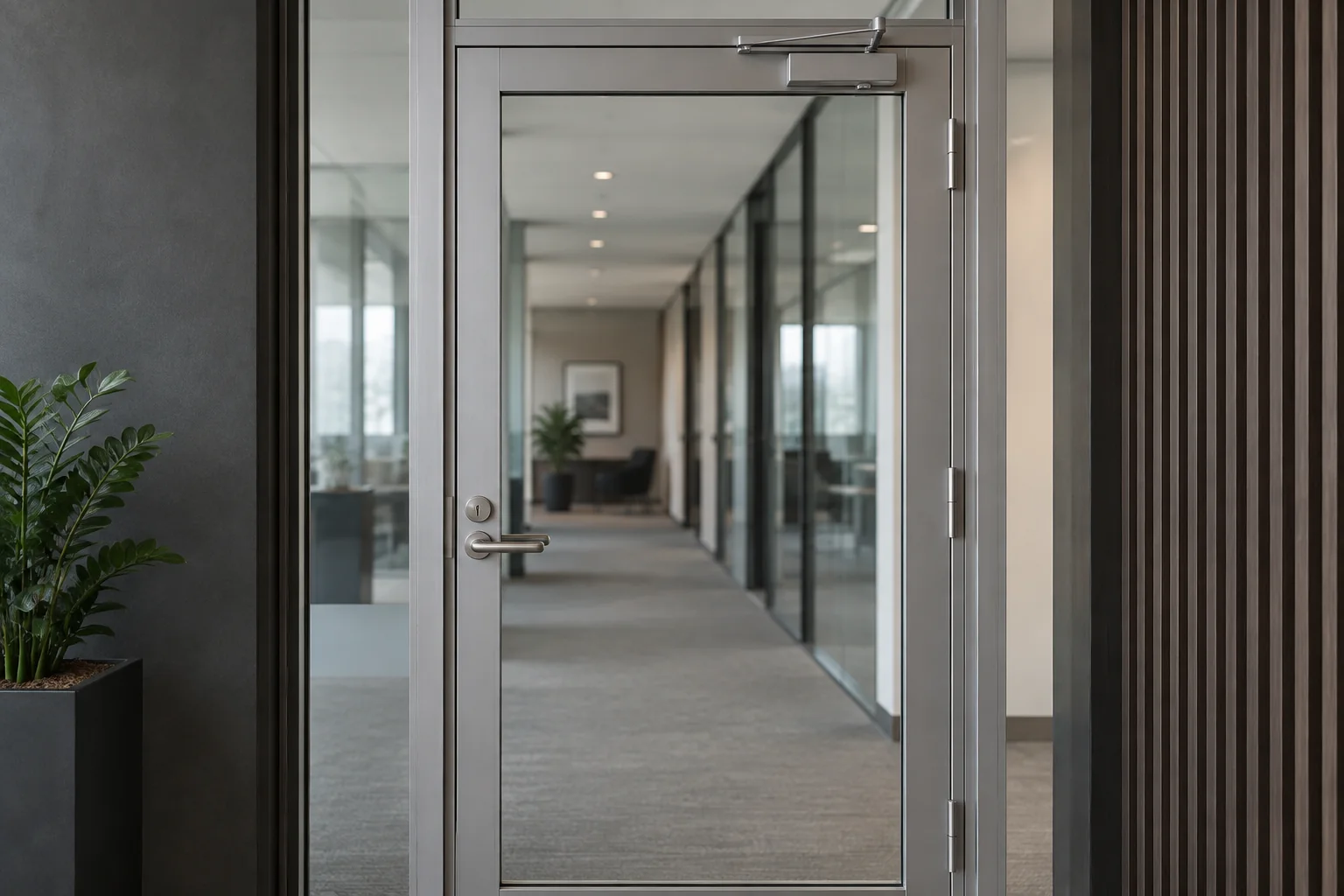
Locks, strikes and frames rated for the traffic and the risk. Everything above this layer assumes the door itself resists.

Master key systems, restricted keys, access control, CCTV, alarms and commercial door hardware. Built around one question: who should be able to open which door, and when.
Businesses tend to buy better hardware when what they actually need is better control. A premium deadlock on a door whose key has been copied eleven times over six years is not a secure door.
Three failures account for most of it:
Keys get cut at a shopping centre kiosk for a casual, a contractor, a cleaner. There is no register, so when someone leaves there is no way to know what left with them. Rekeying becomes the only reset, and it happens far too rarely because it feels expensive.
One key opens everything because it was simpler at fit-out. That means the newest casual can open the safe room, the server cupboard and the stock cage. A master key system solves this without giving everyone a keyring of twelve.
With mechanical keys, an after-hours incident leaves you guessing. Access control produces a log: which credential, which door, what time. That changes an investigation from speculation into a list.
Locks, strikes and frames rated for the traffic and the risk. Everything above this layer assumes the door itself resists.
Knowing how many keys exist and who holds them. Without this, better hardware only raises the cost of the same problem.
Access logs and camera coverage turn an incident from speculation into a list of names, times and doors.
Mechanical and electronic together, because most sites need both and the join between them is where problems usually appear.
A structured hierarchy so each role carries one key that opens exactly what it should.
Keys that cannot be casually copied, with duplication tied to an authorised list.
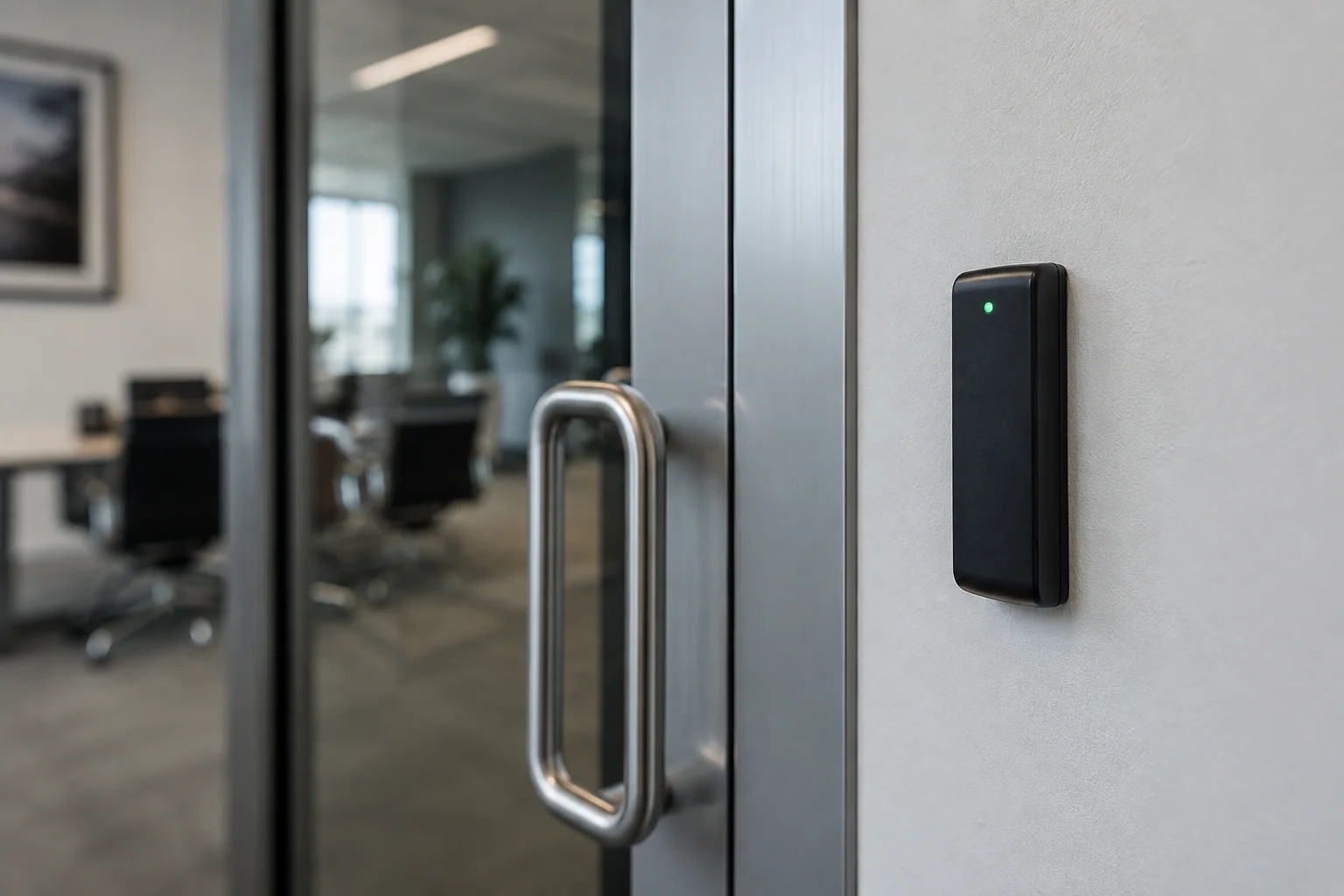
Card, fob and PIN entry with per-door permissions, schedules and an event log.
Camera coverage planned around the actual risk points rather than a fixed package.
Detection and alerting, zoned so a partial arm suits how the site is actually used.
Closers, panic and exit hardware, electric strikes, and locks rated for heavy use.
Any change to a door on an escape route has to keep people able to get out. Where a job touches exit doors, fire doors or required egress paths, the solution is designed around those obligations: locking a door in a way that traps people is never an option, whatever the security benefit.
These are not competing options. Most sites end up with a combination, and the sensible starting point is what fails today.
Most commercial work is done outside opening times so the site stays secure and operating throughout. Hardware is chosen for the traffic the door actually takes.
For anything site-specific, a walk-through is usually faster than an email thread. Call to arrange one.
Request a site visitTreat it as a key in circulation, not a lost key. Rekeying the affected doors invalidates it immediately. If this has happened more than once, it is a strong signal to move to a restricted system or access control, where a departure is handled by cancelling a credential instead of paying for a rekey.
Often a good part of it. Many commercial doors will accept a different cylinder or an electric strike without replacing the door or the lock body. What can be retained is established during the site assessment, and it is usually more than people expect.
It depends on scope, but the work is normally staged so the site stays secure and operational throughout. Larger changeovers are commonly done outside trading hours. Where a door must be out of service for a period, that is identified up front rather than discovered on the day.
Yes. A master key system can be designed across sites so regional or head-office staff carry one key while each location keeps its own keying below that. Access control can likewise be administered centrally with per-site permissions.
The card is deleted from the system and a replacement issued. The lost card stops working at that moment and no hardware is touched. This is the single biggest running-cost advantage access control has over mechanical keys on a site with any staff turnover.
Yes, and most sites run both. Electronic control goes on the doors where permissions change often or a log matters. Mechanical keying covers the rest, including a mechanical override on controlled doors so a power or system failure never leaves the building unopenable.
Tell us what your insurer or contract requires and we will confirm what can be supplied for the work carried out: such as details of the hardware installed and the key system structure. If a policy specifies a standard the current site does not meet, it is better to identify that before the work than after a claim.
Some sites carry requirements that shape the whole design: procurement rules, shared common property, or handover obligations.
Tenancy rekeying, urgent access and key control across a managed portfolio.
02Common-area access, master keying and controlled duplication across shared property.
03Public-sector work subject to procurement, clearance and documentation requirements.
04Construction keying, new-build hardware and clean handover to the end occupier.
Call for urgent locksmith assistance or send the details of a residential, commercial, automotive or electronic security enquiry.